

Cylindrical Roller Ball Bearing
Why Choose Us?
Wide range of Brands covered: Nsk, skf, ntn, fag, ina, koyo, ezo, nmb, iko, thk, timkne, nachi, mcgill, elges, fyh, asahi, ijk, east, rollway, samick, hrb, zwz, lyc, tr, but, zhbr, yfa, hzy, qcs, and other well-known domestic and foreign brands. The bearing models of major brands are complete, and customers can purchase them in a one-stop manner.
Customer Service: We strive to maintain the highest standards of quality, reliability, on-time delivery. The platform guarantees genuine products, and the supply of goods is complete, with a complete logistics system.
Competitive Pricing: We offer competitive pricing without compromising on quality, making our products accessible to a wide range of customers.
Sustainability: We are committed to environmental sustainability and strive to minimize our environmental impact by using eco-friendly production methods.
Cylindrical roller ball bearings are similar to radial ball bearings in that they are designed to carry a radial load while minimizing friction. Cylindrical roller ball bearings can also handle a small amount of axial loads depending on the application and internal design of the bearings. A roller bearing is a type of cylindrical roller ball bearing that uses a cylinder (roller) instead of a ball. In general, the cylindrical roller ball bearings allow for greater radial loads. They are made to handle heavier loads than ball bearings.
-
![NSK Cylindrical Roller Ball Bearing]() NSK Cylindrical Roller Ball BearingNSK cylindrical roller bearings are designed to withstand high radial loads and are commonly used in heavy-duty applications such as rolling mills, machine tools, and power generation equipment.read more
-
![SKF Cylindrical Roller Ball Bearing]() SKF Cylindrical Roller Ball BearingSKF Cylindrical Roller Bearings are used in a wide range of applications, such as machine tools, industrial gearboxes, wind turbines, and railway vehicles.read more
-
![FAG Cylindrical Roller Ball Bearing]() FAG Cylindrical Roller Ball BearingFAG cylindrical roller bearings are a type of rolling-element bearing that consists of cylindrical rolling elements and a cage that separates and guides the rolling elements.read more
-
![NTN Cylindrical Roller Ball Bearing]() NTN Cylindrical Roller Ball BearingNTN Cylindrical roller ball bearings are a type of rolling-element bearing that use cylinders (rollers) instead of balls or needles.read more
-
![NACHI Cylindrical Roller Ball Bearing]() NACHI Cylindrical Roller Ball BearingNACHI Cylindrical Roller Ball Bearing is a type of rolling bearing used in diverse industrial applications.read more
-
![KOYO Cylindrical Roller Ball Bearing]() KOYO Cylindrical Roller Ball BearingKOYO cylindrical roller bearings are a type of rolling element bearing that uses cylindrical rollers to distribute and reduce friction between moving parts.read more
-
![HRB Cylindrical Roller Ball Bearing]() HRB Cylindrical Roller Ball BearingHRB cylindrical roller bearings are designed to carry heavy radial loads and are suitable for high-speed applications.read more
-
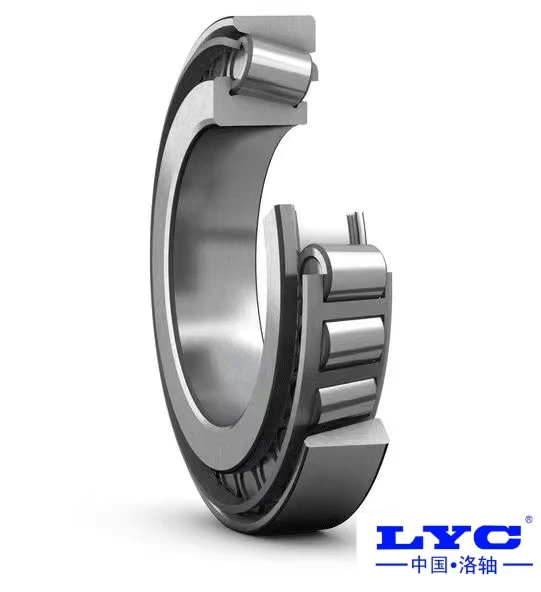
![LYC Cylindrical Roller Ball Bearing]() LYC Cylindrical Roller Ball BearingLYC cylindrical roller bearings are a type of rolling-element bearing that consists of cylindrical rolling elements and a cage that separates and guides the rolling elements.read more
-
![ZWZ Cylindrical Roller Ball Bearing]() ZWZ Cylindrical Roller Ball BearingZWZ cylindrical roller bearings come in a variety of designs and sizes to accommodate different applications.read more
-
![BUT Cylindrical Roller Ball Bearing]() BUT Cylindrical Roller Ball BearingA cylindrical roller ball bearing is a type of rolling element bearing that is designed to support heavy radial and axial loads.read more
-
![TIMKEN Cylindrical Roller Ball Bearing]() TIMKEN Cylindrical Roller Ball BearingThe Timken cylindrical roller ball bearing is a type of rolling-element bearing designed to support high radial loads and moderate axial loads.read more
-
![HZY Cylindrical Roller Ball Bearing]() HZY Cylindrical Roller Ball BearingHZY Cylindrical Roller Ball Bearing is a type of rolling element bearing that is used to provide support to the rotating shafts in various applications.read more


Benefits of Cylindrical Roller Ball Bearing
The cylindrical roller ball bearings act as a bridge between machinery and various mechanical components, thus helping them to reduce friction. It facilitates the movement of components through the cylinder as a roller element that can bear heavy loads and can be used in a variety of heavy-duty machinery. Specifically designed to cater to extreme mechanical conditions, these bearings can support heavy radial loads. Cylindrical roller ball bearings have linear contact areas with outer rings, making them distribute loads on a broader surface area.
The performance and design are why cylindrical roller ball bearings are suitable for specific applications. It offers varied advantages:
• Cylindrical roller ball bearings has a higher resistance to fatigue and shock than a ball bearing.
• Cylindrical roller ball bearings offers simple mounting and dismounting due to its unique design.
• Cylindrical roller ball bearings is designed to take the combined radial load (N and NU type) and thrust load (NJ and NUP type).

The cylindrical roller ball bearings can be used in various types of mechanical systems. The different types of cylindrical roller ball bearings can offer different usages:
Axial Displacement: The bearings are designed to support axial loads and facilitate movement to and from axial directions within the machinery. The N and NU types of cylindrical roller ball bearings are perfect use cases for axial displacement, as single-row cylindrical roller ball bearings offer the scope of axial displacement in some limits relative to the housing.
Withstand Incidental Thrust Loads: The thrust load is a load that is applied parallel to the rotation of the axis. The NF, NJ, and NUP series of cylindrical roller ball bearings are designed in such a way as to withstand incidental thrust loads apart from radial loads.
Uses in Heavy Machinery and extreme systems: The cylindrical roller ball bearings are used in high-speed systems and can be deployed for high-performing systems such as agricultural machinery, wind turbines, mining machines, etc.
The main difference between cylindrical roller ball bearing and ball bearings is the type of rolling element used. Cylindrical roller ball bearing use cylindrical rollers, while ball bearings use balls. Because of this, cylindrical roller ball bearing can carry heavier loads and are better suited for applications where there is heavy radial or thrust loading.
Additionally, cylindrical roller ball bearing typically have a higher load-carrying capacity and a lower speed rating than ball bearings. On the other hand, ball bearings are better suited for applications where there is high speed and low to moderate loading.
One of the most notable differences between cylindrical roller ball bearing and ball bearings is that cylindrical roller ball bearing are typically more expensive than ball bearings. However, they offer several advantages, including higher load-carrying capacity and increased accuracy.

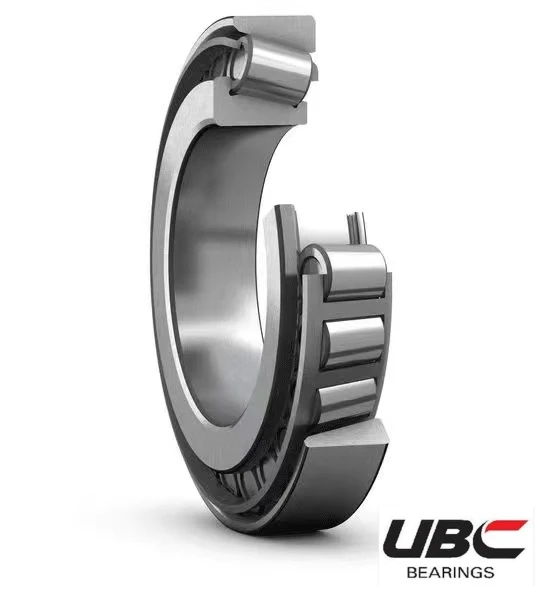
Cylindrical Roller Ball Bearings Oil Mist Lubrication and Other Lubrication Methods
1. The oil mist can be dispersed with compressed air to all friction parts of the cylindrical roller ball bearings that need to be lubricated. A good and uniform lubrication effect can be obtained.
2. The consumption of lubricating oil for cylindrical roller ball bearings is greatly reduced.
3. Compressed air has low specific heat and high flow rate, which can easily take away the heat generated by the friction of cylindrical roller ball bearings.
4. Because the oil mist has a certain pressure, it can play a good sealing role, and prevent foreign impurities and moisture from entering the cylindrical roller ball bearings friction pair.
5. The thinner oil circulating lubrication system has a simple and lightweight structure, a small footprint, low power consumption, convenient maintenance and management, easy automatic control, and low cost.
Seven Tips for Proper Cylindrical Roller Ball Bearing Maintenance
Handle with care
Cylindrical roller ball bearings are delicate enough to get damaged quickly. As such, it is very important that they are stored horizontally in a clean and dry environment with their packaging intact. Do not expose them to any airborne contaminants, as even a tiny speck of dirt can cause premature failure. Never hammer or pound them, or apply a direct force on it or its outer ring, which can cause damage to the rolling elements, resulting in misalignment. The most important thing to remember is to never remove cylindrical roller ball bearings from their packaging until ready for use.
Check the cylindrical roller ball bearing housing and shaft
Whenever a cylindrical roller ball bearing is used for mounting, it is crucial that the housing and shaft are inspected for any sort of physical condition or damage. Always use a soft cloth to wipe the surfaces clean and make sure any nicks and burrs are removed.
Mount the cylindrical roller ball bearings correctly
The method used to mount the cylindrical roller ball bearings depends on the type of bearing. For example, bearings with cylindrical bores are generally mounted through a press fit method. Bearings with tapered bores can be mounted directly on tapered or cylindrical shafts with the use of tapered sleeves. However, pressure should be applied only with a press fit because without it the raceways can become damaged.
Avoid preheating or overheating
The maximum heating allowed on the cylindrical roller ball bearings depends on the heat treatment of the material. If they are heated above the permitted limit, they can permanently deform or soften the bearing steel, lowering load carrying capacity and resulting in a failure. Always heat the bearings using induction heaters, and never with an open flame.
Always use the proper tools
Specialized tools like bearing pullers, cylindrical roller ball bearing fitting tool kits, oil injector kits, hydraulic nuts, or induction heaters should be used in the mounting and dismounting processes. These tools ensure the smooth process of mounting or dismounting, in order to minimize the risk of damage.
Avoid corrosion
It is crucial that you should not expose cylindrical roller ball bearings to the presence of water for a long time, as it will lead to rust and corrosion. It will also cause the premature failure of the bearings, which can affect the machine performance and productivity. As a result, it will increase your operating costs. Also, make sure to wear gloves when handling bearings. Perspiration can also lead to rust and corrosion.
Proper lubrication
If you want to have a prolonged life of your cylindrical roller ball bearings, it is crucial that they should be properly lubricated. The correct lubricant depends on the environmental conditions, temperature, speed and load. In this case, it is advisable that you should follow your manufacturer's recommendations.
Cylindrical roller ball bearings are able to support significant radial loads, or even very significant ones. There are several types of cylindrical roller ball bearings. They vary according to the number of rows of rollers (one, two or four) and whether or not there is a cage. A cage allows the bearing to support significant radial loads and a high speed. The absence of a cage allows the bearing to have more rows of rollers and therefore to support even heavier radial loads. The only disadvantage is that cylindrical roller bearings without cages do not tolerate as high speeds as the ones with cages.
Cylindrical roller ball bearings are also very robust and have a long bearing life. Additionally, some bearings can also support an axial load, provided that they do not have a shoulder on the inner and outer rings. If this is the case, you will not be able to use your bearing to support an axial load.
The Considerations for Buying Cylindrical Roller Ball Bearing
Here are the key steps to follow:
Determine the load requirements:
Calculate the radial and axial loads that the cylindrical roller ball bearings will need to support. Consider both static and dynamic loads, as well as any potential impact or shock loads.
Identify the operating speed:
Determine the rotational speed at which the bearing will operate. This is crucial for selecting a cylindrical roller ball bearings with the appropriate capacity. To handle the required speed without excessive friction or heat generation.
Consider the bearing type:
Understand the specific requirements of your application. And choose the appropriate type of cylindrical roller ball bearings. This can include variations such as single-row, double-row, full-complement, or multi-row designs.
Calculate the bearing life:
Estimate the desired cylindrical roller ball bearings life based on the application requirements. Use industry-standard formulas or software tools to calculate the estimated bearing life.
Determine the bearing dimensions:
Consider the shaft and housing dimensions, as well as the space available for the cylindrical roller ball bearings. Ensure that the selected bearing can fit within the designated space. And is compatible with the surrounding components.
Consult bearing catalogs and specifications:
Refer to catalogs or online resources to find cylindrical roller ball bearings models. That meet the calculated load, speed, and dimensional requirements. Pay attention to specifications for radial and axial load capacities, speed ratings.
Verify compatibility with operating conditions:
Consider the environmental conditions in which the cylindrical roller ball bearings will operate. Such as temperature, humidity, contamination, and vibration. Ensure that the selected bearing can withstand these conditions and provide reliable performance.
Our Factory
Zhejiang Zhongji Changsheng E-commerce Co., Ltd. was established in 2020 and mainly operates a bearing trading platform. In March 2022, the platform's consignment sales performance exceeded 10 million, and in November 2022, there were over 1000 platform suppliers. In March 2023, the platform's consignment sales performance was nearly 20 million. In 2023, the company's self operated automotive parts business was fully launched, mainly for chassis components such as automotive bearings, ball heads, swing arms, and stabilizer bars. At the same time, pneumatic components were launched and online exhibition business was opened, Promote excellent manufacturers' brands.
Brands covered include: Nsk, skf, ntn, fag, ina, koyo, ezo, nmb, iko, thk, timkne, nachi, mcgill, elges, fyh, asahi, ijk, east, rollway, samick, hrb, zwz, lyc, tr, but, zhbr, yfa, hzy, qcs, and other well-known domestic and foreign brands.


FAQ
Q: What is a cylindrical roller ball bearing?
Q: What is the definition of cylindrical roller ball bearing?
Q: What is the difference between spherical and cylindrical roller ball bearings?
Q: What are the failures associated with cylindrical roller ball bearings?
Q: Which is better cylindrical roller ball bearing or deep groove ball bearing?
Q: What is the purpose of cylindrical roller ball bearings?
Q: Can cylindrical roller ball bearings carry more weight?
Q: What type of load does a cylindrical roller ball bearing have?
Q: Why preloading is necessary in cylindrical roller ball bearing?
Q: How do you check cylindrical roller ball bearingclearance?
Q: Can cylindrical roller ball bearings take thrust load?
Q: What are the components of cylindrical roller ball bearings?
Q: What is an example of a cylindrical roller ball bearing?
Q: What is a common example of an application that uses cylindrical roller ball bearings?
Q: What are cylindrical roller ball bearings made of?
Q: What are the elements of cylindrical roller ball bearings?
Q: What are cylindrical roller ball bearings balls made of?
Q: Which material is used to make the rolling elements of cylindrical roller ball bearing?
Q: Where are cylindrical roller ball bearings used?
Q: Which is better cylindrical roller ball bearing or deep groove ball bearing?
We're well-known as one of the leading cylindrical roller ball bearing manufacturers and suppliers in China. Be free to wholesale high quality cylindrical roller ball bearing in stock here and get quotation from our factory. Contact us for more details.
electric shaver cylindrical roller ball bearing, power supply cylindrical roller ball bearing, ZWZ Cylindrical Roller Ball Bearing